

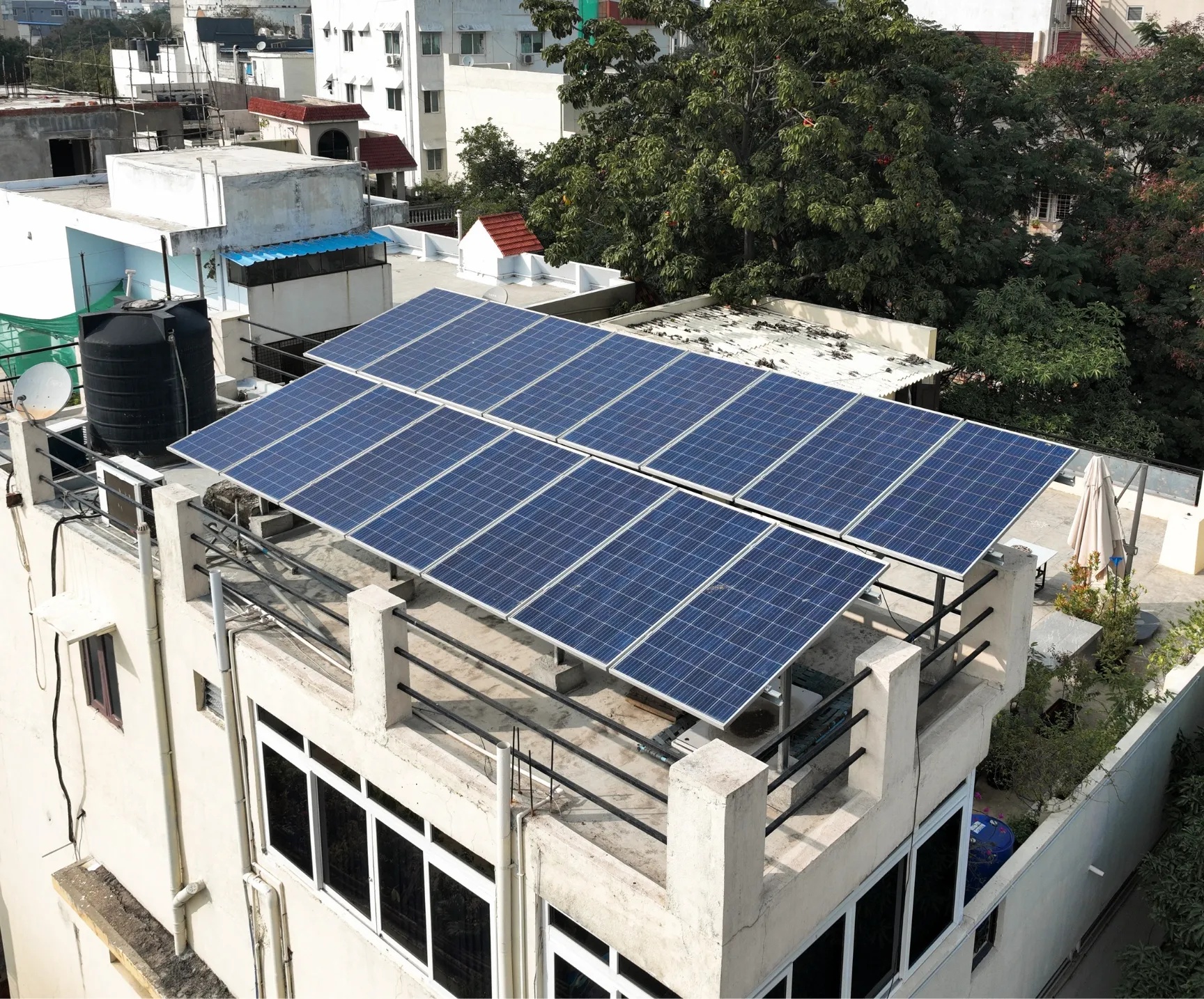
Best On-Grid Solar System Supplier in Pilibhit
An on-grid or grid-tied solar rooftop system is a configuration that operates completely in sync with your local electrical utility grid. This bidirectional connection means that any excess power generated by your system can be seamlessly fed directly back into the grid network through net metering, earning you billing credits. Conversely, any deficiency in real-time solar production is automatically supplemented by grid power. Many residential and commercial users are opting for an On-Grid solar solution to enjoy clean energy savings without the added complexity of maintaining large structural batteries.
How On-Grid System Works?
During daylight hours, your solar panels continuously capture sunlight and convert it into electrical energy. This power can immediately be used to run your home or business appliances. If your system produces more electricity than your building needs, the excess is instantly exported straight out into the utility grid.
If at any time your system requires more energy than the panels are generating (such as on heavily overcast days or throughout the night), it smoothly draws the required power directly from the regular electricity grid. This automated workflow guarantees that users will always have uninterrupted power access.
The key financial advantage of an on-grid system is utility credit optimization. Every unit of electricity you export to the main power lines is recorded by your utility provider, directly reducing your operational electricity expenses month after month.
The conversion process is straightforward: sunlight strikes the solar panel array, creating DC electricity. This DC electricity passes directly through a specialized grid-tied solar inverter which converts it into usable AC electricity for distribution to your building loads (homes, factories, shops, schools, etc.). While the early stages of generation match other systems, the defining element of an On-Grid configuration is that all excess energy flows directly into the public utility grid. Your utility bill is systematically lowered based on the feed-in-tariff rates fixed by local government regulations.
Benefits of On-Grid Solar Systems
Guaranteed 24*7 Power
By leveraging an active operational bridge between real-time solar panel output and the public power grid, you will always have access to electricity whenever you need it.
Opportunity to Earn Credits
With an integrated net meter, you can track the exact number of units sent out to the power grid and claim lucrative billing credits to offset future utility costs.
More Savings
On-grid systems lower your electricity bills dramatically. You can adjust high-load usages away from peak utility demand hours, effectively eliminating peak demand surcharge fees entirely.
Excellent Investment Returns
With a short payback timeline of roughly 3.5 years, this setup provides clean electricity for over two decades, converting empty rooftop space into a strong asset with full ROI within 4-5 years.
Works Efficiently
It works in absolute sync with the grid to utilize 100% of the solar power produced. Because it shares the load with the utility line, a 2 kW on-grid setup can comfortably help run up to an 8 kW combined appliance load.
Easy to Install
Without the weight and space constraints of standalone battery modules, setup configuration on residential, commercial, or institutional rooftops is simple and efficient.
Less Costly
Since an on-grid solar layout requires absolutely no battery banks, the initial capital expenditure and total component cost are much lower compared to alternative options.
Minimal Maintenance
Fewer moving elements and no batteries to replace mean an exceptionally long component lifespan with minimal ongoing maintenance required.
Subsidies & Incentives
Most states and central authorities offer substantial government subsidies and fiscal incentives to heavily subsidize upfront on-grid installation costs.
Primary Components
How much will the Grid-Tied system cost?
On-grid solar system prices vary based on selection of brands, material component qualities, and component warranty coverage. Below is the latest all-inclusive pricing framework across India.
| On-Grid Solar System | Price (All Inclusive) |
|---|---|
| 1 kW | ₹ 80,000 |
| 2 kW | ₹ 1,35,000 |
| 3 kW | ₹ 1,80,000 |
| 5 kW | ₹ 2,90,000 |
| 10 kW | ₹ 5,60,000 |
| 25 kW | ₹ 12,75,000 |
Frequently Asked Questions
Which appliances can run on a grid-tied solar system?
An on-grid solar system runs in complete synchronization with your primary grid line. Unlike standalone backup inverters that have strict load limits, there are no limitations here—you can power everything in your home, including heavy loads like Air Conditioners, water pumps, and machinery. For example, a well-synchronized 3 kW on-grid solar system can comfortably support an active 10 kW building load by pulling the remainder from the utility lines.