

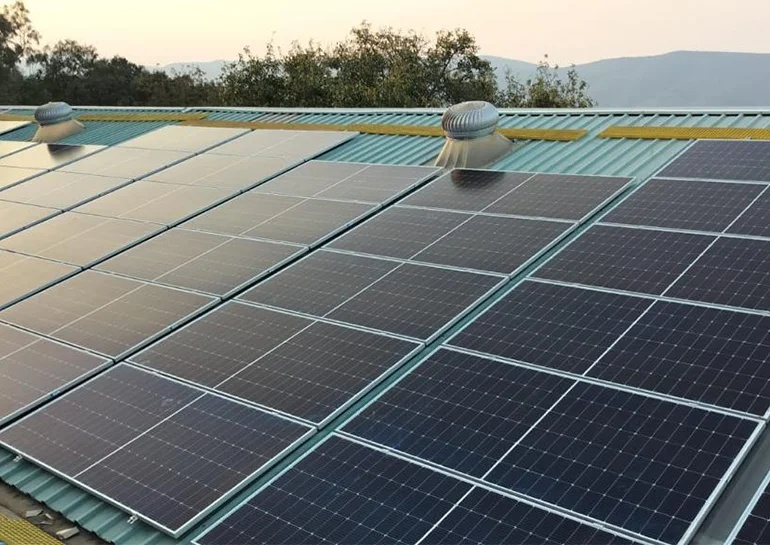
Top Hybrid Solar Roof-top System Installation in Pilibhit
A hybrid solar system is a system that works along with the grid and also with the batteries, which means that any excess or deficiency of power can be fed to the grid through net metering & to the batteries connected with the system. Many residential and commercial users are opting for a hybrid solar solution as they get a chance to enjoy self-generated electricity and save on their electricity bills as well. You will always have power either from the solar system, from the batteries, or from the grid. This type of system is a perfect mixture of an on-grid and off-grid system.
How Hybrid System Works?
In a hybrid solar system, solar panels produce power during the day. This power can either be used instantly or exported to the batteries to act as backup for power outages. When the batteries get fully charged, the excess power is transferred directly to the grid.
If at any time the system runs out of power, only then does it draw electricity from the main grid, and you only need to pay the electricity bill for that specific consumption. Hence, a user will never run out of power. Similarly, any excess electricity produced by the system is safely fed back into the utility grid after filling up your battery backups completely.
The core advantage of a hybrid system is that the user has their own self-generated electricity and does not rely entirely on the discom/grid electricity, reducing the stress of heavy electricity bills. Furthermore, users have no tension regarding sudden power cuts since the batteries stay actively connected to handle structural loads.
The light from the sun falls on the solar panels from where DC electricity is generated. This DC power is converted into AC with the help of the inverter, which is then used by consumers in their homes or any commercial place i.e., factory, shop, school, etc. Till this stage, operations of any solar system are identical. The main difference occurs beyond this point. After powering your immediate loads, there are two distinct routes for the extra energy generated:
1. Battery Storage: It can be stored in batteries for use at a later part of the day (similar to an off-grid solar system).
2. Grid Feed-In: After fully charging the batteries, it directly feeds back to the utility grid (similar to an on-grid solar system). Based on the feed-in-tariff rates (tariff fixed by the government for purchase of the solar power generated from solar plants) in your area, your electricity bill is dynamically reduced for the exact amount of power you sell back to the power grid.
Benefits of Hybrid Solar Systems
Guaranteed 24*7 Power Supply
With an option to use either solar power or battery power, the consumer will always have continuous access to electricity and will never suffer from sudden power outages or blackouts.
More Savings
The main purpose of installing a hybrid solar system is to optimize clean energy generation, get rid of unpredictable electricity bills, and eliminate downtime caused by grid failures.
Good Investment Returns
It has roughly a 5.5-year payback period and provides virtually free electricity for more than the next two decades. You can convert your own property into a revenue-generating avenue with an ROI in just 5-6 years.
Works Efficiently
The system works independently with batteries during dynamic cut-offs. There is no limitation in the system output unless you have miscalculated your initial solar load requirements.
Easy to Install
Installation on structural roofs is clean and can be efficiently completed on residential rooftops, commercial spaces, government organizations, and private institutions.
Dual Sync Advantage
The Hybrid system works flawlessly in sync with both the grid and batteries. There is no structural limitation except the initial cost factor, which is higher compared to standalone on-grid or off-grid systems.
Primary Components
How much will the Hybrid system cost?
Hybrid solar system pricing fluctuates based on your brand selection, product quality components, and custom replacement warranty packages. Below is the latest all-inclusive price list in India.
| Hybrid Solar System | Price (All Inclusive) |
|---|---|
| 1 kW | ₹ 80,000 |
| 2 kW | ₹ 1,60,000 |
| 3 kW | ₹ 2,40,000 |
| 5 kW | ₹ 4,10,000 |
| 10 kW | ₹ 7,60,000 |
| 20 kW | ₹ 15,00,000 |